Showing posts with label Luke Guthrie. Show all posts

Friday, September 28, 2012

Book 8: A Strange Little Monster

A Strange Little Monster
Written by Sue Whiting and illustrated by Stephen Michael King


This book belongs to the Aussie Nibbles Series which allow beginner readers to experience the mysteries, humour and thrills of reading. A Strange Little Monster is about a little monster who doesn't like to scream, shout or be scary like her family. She prefers to sit quietly or play her flute.When Sasha the little monster is faced with a difficult situations, her ability to play the flute saves the day. The concept of the book is accepting yourselves and accepting others. The book is for 6 to 8 year old. In a guided reading lesson, students can identify emotion, inferences in actions, and the messages about acceptance.

Book 7: The Adventure of Life

The Adventure of Life
Written by Jean-BenoĆ®t Durand and illustrated by Robin Gindre


The Adventure of Life is a book which tells kids about the world and the many interesting facts that are within it. It answers the questions which kids love to ask such as Why did the Dinosaurs die? Why foxes have different kinds of ears? and how fast mice grow compared to humans. The illustrations in the book are quite modern and retro; they definitely add a different dimension to the book. In the classroom setting this book is effective in science and English. The book can be used as a tuning in activity for a science topic as well as a guided reading lesson and a presentation of a particular aspect.

Thursday, September 27, 2012

Towards a Model of Reading

There are four main areas of importance that can be identified when thinking about reading
The contexts in which we read
The texts we read
The knowledge we need in order to read
The skills we employ as we read

Week 7 Workshop

English Language and Literacy

MINI-TEST
What are the four que systems?
Semantics, syntax/grammar, graphophonic, graphological, pictorial

What are the four roles of the reader?
§ Text Analysis - Critique, bias from point of view
§ Text User - Relate the text to their lives, function of the text, what do i do with the text, identify text types and use according or purpose
§ Code Breaker - Letters and sounds, structure, punctuation, phonics
§ Text Participant - Readers need to understand the text, know what the author is telling you

- All these are necessary but none are sufficient by themselves -

What are the teaching strategies for reading?
§ Shared
§ Guided
§ Independent

Three main focuses in an effective reading program (Winch, pg. 198)
§ Texts
§ Reading cues or sources of information
§ Reading practices or roles of the reader.

Guided Reading
§ A thinking, problem solving approach to reading
§ Talking, thinking and reading
§ Students learn how to become code breakers, text participants, text users and text analysts.
§ Use the question WHY? why did the author do this, why do the characters
§ Have a particular group of kids in mind when framing the question - match the learning needs to the particular group of kids.

Guided Reading Lesson - Mythical Creatures, written by Tracey Michele
The guided reading will be for a Year 4/5 with moderate reading ability. Read the whole book
What will these book be about? What is mythical?
Does anyone recognise the mythical creatures on the front cover?
Looking at the contents page, how many creatures are there and what are they?
Do you think the writer is being fair in telling us about this topic?
After reading about each creature - Where is the mythical creature located? What does located mean? What are some of the characteristics? What are characteristics

Thursday, September 13, 2012

Book 5


Out Of The Blue
Stories and Poems About Colour

Written by Hiawn Oram and Illustrated by David McKee

This book is a collection of stories and poems that have the underlying theme of colour. For each colour there are a few stories/poems. The illustrations are quite startling, intense depictions of colour. The book can be used for a few years. There are simple stories and complex ones but all have illustrations which tell the story well.

Book 4


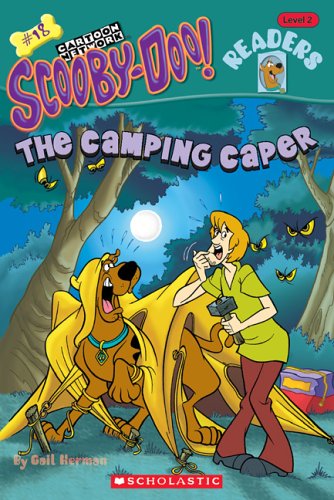
Scooby-Doo - The Camping Caper
Written by Gail Herman


Scooby-Doo The Camping caper written by Gail Herman is a mystery in an easy to read format. It is one of many in the Scooby-Doo series. The book would suit beginning readers it’s about a super sleuth dog (Scooby-doo) and his companion Shaggy who belong to the Mystery Inc gang. It evolves around the many mysteries they get involved in. The camping caper is illustrated by Duendes del Sur, the pages are colorful and would capture the attention of early readers. The Mystery Inc. gang goes camping in Coolsville Woods and mysteries need to be solved it allows the reader to help solve them. Scooby-doo and Shaggy go to collect fire wood because they didn’t want to hear a scary story been told by the gang around the campfire, however walking in the woods was a scary story all of its own.

Book 3


Nude

By Morris Gleitzman and Paul Jennings.


Nude is the first novel in a six part series however the first three pages lure you in. With the authors use of language it would capture the interest of many year levels.eg lump of poo, fresh piece of poop and gaping at the crazy sight. The chapters throughout the novel rotate between the two main characters, Sprocket and Amy, which was a bit confusing at first then became intriguing right to the last page, where the connection between the two characters was revealed. The novel is written  in the first person which would allow the imagination to run wild.


Book 2


Airy Fairy Magic

Written by Margaret Ryan

Airy Fairy Magic Mix-Up! Written by Margaret Ryan is one novel in a series based around a boarding school for orphaned fairies. The main character is Airy Fairy; she daydreams and gets into a lot of trouble when she messes up her spells. Airy Fairies main rival is Scary Fairy who dislikes Airy Fairy because despite her clumsiness and the muddles she gets into all the other fairies love her. Magic Mix-up! is set in the summer holidays and the teacher takes the fairies on their summer vacation to a camping ground. Scary Fairy uses the holiday to pick on Airy Fairy but all fairies rally around her. This novel may interest girls more than boys but tackles real issues of bullying in a light hearted way and can open many areas of discussion on the topic. Used in a classroom setting the novel could target year levels from Reception to Year 4.


Wednesday, September 12, 2012

Week 4

In Week 4 we focused on writing as a social and cultural practice and the use of writing in a classroom.The first activity was thinking back to our early memories of writing. Jack kept a journal when he was younger, writing when they travelled. He liked it.

Writing to live; connects writing with students lives.After this activity we looked at some examples of NAPLAN tests, the literacy component. The creative writing section demonstrated the developing writer and proficient writer. It was evident that there were more complex text types e.g. arguments and more varied sentence openings and longer, more complex sentences.


We were all handed out examples of students writing and asked to match the writing samples and its description. The first example was experimental/early writing because it was evident that oral language was the precursor of speech written. The student's writing was very egocentric with repetitious sentence patterns. Example two and three belong in the  Experimental writing phase since there were simple  to compound sentences; few complex sentences and little awareness of others and their emotions.

Reading
Features of a Recount
  • A recount tells the reader what happened, recalling a past event such as Elouisa's excursion
  • It has a descriptive title.
  • Orientation
  • Personal Comments to convey opinion
Language used in a Recount
  • Nouns and pronouns to identify those involved
  • Action verbs, past tense, conjunctions and time connectives, uses adverbs, and adjectives.
Features of a Procedure

  • A way of insturctions or give directions


Activity 2

In the piece is it apparent that the girl was writing was in the Experimental/Early Writing stage. Her writing is speech written down since there is minimal punctuation. The feelings manifest through the constant listings of events as well using the word 'Oh Terrific'.


Saturday, September 1, 2012

Book 13: Matilda

Matilda
Written by Ronald Dahl and illustrated by Quentin Blake

Matilda is one of the most well known adolescent novels. Matilda is a little girl who slowly discovers her brilliance and her parents don't even know it. She takes you on a journey through school, home life, and Miss Honey. Matilda must survive school which is ruled by the frightening Miss Trunchball. Ronald Dahl takes his readers into a world of one little girl enduring cruelty, loneliness and an overwhelming power to teach lesson to the adults in her life. 

This book is for children from 8 to 12 years old.

Matilda by Ronald Dahl can be used in a classroom very effectively. Children can explore vocabulary, activities/writing based upon events in the story, and guided reading about inferring. 

Children can work with the narrative structure, creative writing tasks such as 'if you had telekinesis I would....' 

Book 12: Always Jack

Always Jack
Written by Susanne Gervay and illustrated by Cathy Wilcox


This particular book the third instalment of the Jack series. With collaboration with Cancer Council NSW and National Breast and Ovarian Cancer Centre this book tackles the difficult issue. Jack is dealing with a lot of issues at the moment, girls, his mother getting married, and moving house. Readers experience Jacks emotions through the diagnosis, treatment and after-shock. Despite the storyline and setting having a heavy topics, the book is funny and quirky. The book teaches children who aren't in this situation understanding and empathy; for kids who are experiencing a similar situation or gone through it that they're not alone and whatever 
emotions they are experiencing they are okay and normal.

Book 11: The Wildkin's Curse

The Wildkin's Curse
Written by Kate Forsyth


Three teenagers embark on an adventure loaded with excitement, evil, love, treachery, and fulfilment. Set in a land of mythical creatures and magic, the characters have a quest to rescue a Wildkin princess. Kate Forsyth creates a lively adventure through her vivid descriptions, different characters and plot.

It is a good introduction to fantasy to children. This book is for children aged 12 to 15 because of its mature themes and concepts as well as the nature of the characters.


Book 10: Willy the Wimp

Willy the Wimp
Written and illustrated by Anthony Browne


Willy is a chimp who gets pushed and bullied a lot by the bigger people. One day he decided to change. This particular book can be used in guided reading and lessons. It is orientated around self-awareness, problem solving, cultivating positive qualities, and positive thinking. 

Book 6: Specky Magee

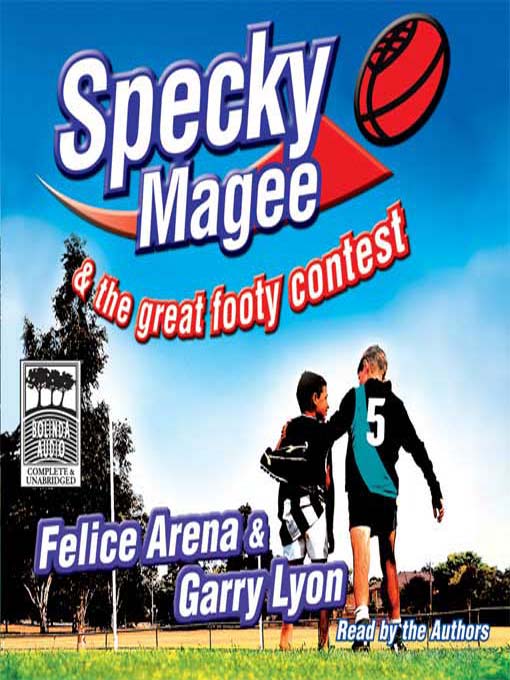
Specky Magee and the Great Footy Contest


Written by Felice Arena and Garry Lyon


It is a fantastic novel that is filled with camaraderie, teamwork, secrets, revelations, plenty of plot twists and 'issues'. Simon Magee or 'Specky' is an aspiring AFL player as well as a regular kid. The novel has many cultural references and glorious language. The themes such as friendship, fair play, and honour are woven into the storyline. The main character is likeable and therefore easy to relate to. For classroom use, the book would be effective in a 5,6, and 7 classroom. There are numerous inferences which can be used for guided reading questions.


Thursday, August 23, 2012

Little Red Taxidermist - Luke Guthrie

Preparation for Workshop - Alteration of a Fairytale.

My popular children's fairytale is Little Red Riding Hood. My recreation of the narrative will involve the role reversal of not only the little girl and the wolf but what is 'deemed' vicious and scary is quite the opposite. Normally the relationship illustrated in the original story is the comparison between the sanctity of the village and the forest. For this retelling, the forest is your safest bet and venturing too close to the village will result in being mounted on a wall.
Key Points/Notes;
Mr. Wolfeson is a timid animal.
Whilst growing up, Mr. Wolfeson was told stories about the notorious Little Red Taxidermist
When Mr. Wolfeson walks to work he is constantly bullied by three pigs.

Book 1: I Spy Dad!

Title: I Spy Dad!
Author: Janeen Brian
Illustrator: Chantal Stewart
Publisher: New Frontier Publishing, 2009
The book is suitable for junior primary students, focusing on Reception to Year Two. It begins with a little girl searching for her father. The girl finds other types of Dads before finding her own. The book has repetition and rhyming. An example is 'I can see a splashing Dad, a crashing Dad, a crashing Dad. A rowing Dad, a mowing Dad, and a snip-snap sewing Dad.'
I Spy Dad! Is a humorous and a very playful book. The illustrations are effective in showing enjoyable and loving fathers as well as the relationships between child and Dad.